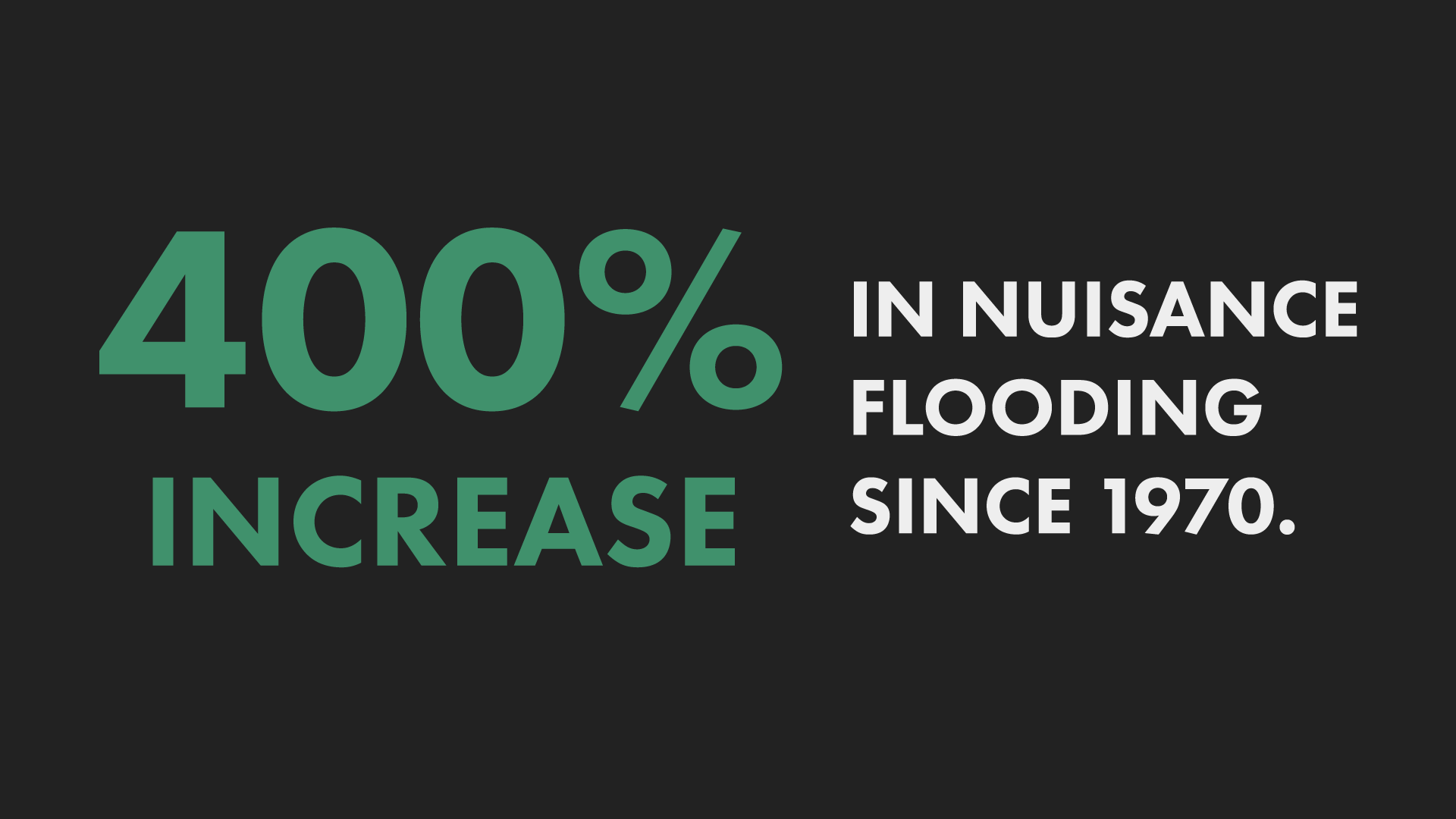
Wilmington’s riverfront is the city's primary economic engine, supporting nearly $1 billion in economic activity. However, this asset is under increasing environmental stress; according to NOAA technical benchmarks, nuisance flooding in Wilmington has increased by over 400% since 1970. The challenge was to create a unified technical framework that allows for rapid urban growth while aggressively mitigating the risks associated with sea-level rise and increased storm intensity.
The Solution: Cross-Functional Regulatory Alignment
I led the development of the Urban Design Guidelines to serve as the critical link between municipal silos—specifically Department of Transportation (DOT), Public Works, and Planning. By resolving the friction between high-level regulatory intent and site-specific physical constraints, I established a set of enforceable technical benchmarks. These standards ensure that every new development contributes to the city's overall resilience rather than placing additional strain on aging infrastructure. These guidelines were designed to operationalize the Create Wilmington: 2040 Comprehensive Plan, ensuring that all "cleantech" and sustainable infrastructure goals were baked into implementation policy.
Process: From Policy to Performance Benchmarks
My methodology focused on transforming abstract sustainability goals into a unified technical playbook by orchestrating a high-stakes coalition of stakeholders. To ensure institutional buy-in and operational clarity, I facilitated a rigorous synthesis between multiple municipal departments—including Planning, Engineering, Parks & Recreation, and Public Works—as well as outside agencies. By fostering an inclusive and collaborative project inception, I reduced the friction typically found in multi-jurisdictional infrastructure projects. With North Carolina's infrastructure facing a multibillion-dollar funding gap, the Wilmington Guidelines were developed to align with ASCE 24 (Flood Resistant Design and Construction) standards. This ensures that municipal projects are 'investment-ready' for federal grants and meet the rigorous criteria for low-risk capital deployment.
Impact: Sustainable Growth in a Volatile Environment
These guidelines seek to move Wilmington toward a more predictable and resilient development model. By providing a sustainable framework for growth, we maximize alignment across sectors for better protection against documented environmental trends. This work highlights that policy direction can be an effective tool for balancing economic expansion with climate reality. Beyond historical NOAA data, these policies are informed by predictive modeling from the First Street Foundation, which identifies that 43% of Wilmington’s critical infrastructure is at risk of becoming inoperable due to flooding within the next 30 years. The guidelines provide the technical mitigation strategies required to stabilize these asset values.
Strategic Value
This project demonstrates my ability to navigate multi-jurisdictional regulatory environments to protect high-value physical assets. I specialize in creating the Technical Governance that reduces operational risk, ensures cross-functional alignment, and provides a clear roadmap for scaling infrastructure in climate-vulnerable markets.