I helped establish the city’s first large-scale model for nature-based Infrastructure. This project connects six diverse neighborhoods, bridging the gap between historical preservation, performance, and modern climate resilience.
Managing Complexity in a High-Risk Environment
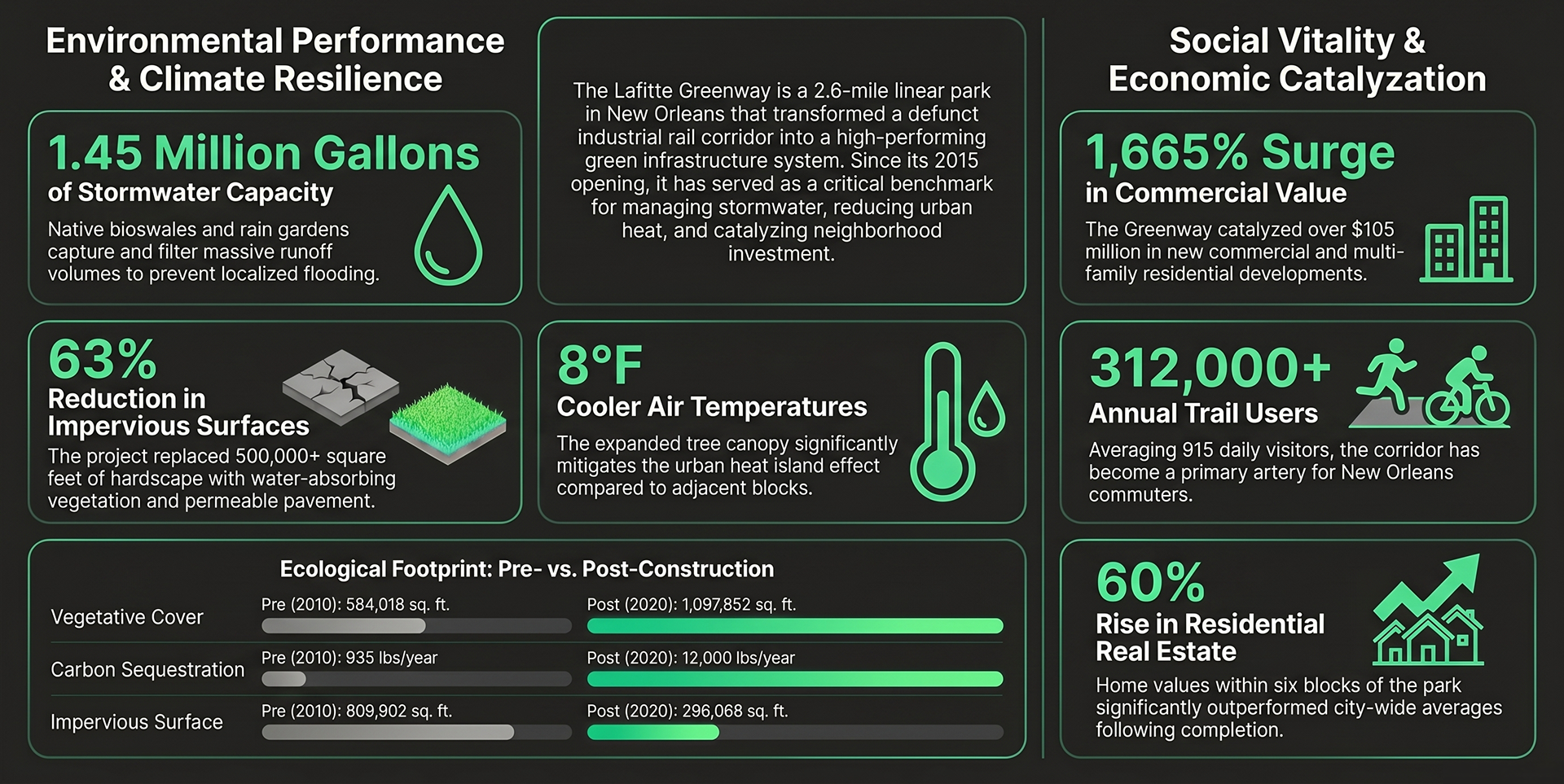
In a city defined by its relationship with water, the challenge was to move beyond traditional 'gray' infrastructure. We needed to design a system that could manage heavy tropical rainfall without overwhelming the city’s drainage capacity. This required a technical synthesis of permeable surfaces, native meadows, and bio-retention cells to mitigate both flood risk and the Urban Heat Island effect in some of the city's most vulnerable areas. Neighborhoods adjacent to the Greenway face significant subsidence and flooding risks. Strategic green infrastructure in this corridor is part of a broader effort to achieve a 39% flood volume reduction during major storm events.
Multi-Agency Governance & Technical Alignment
I collaborated with a vast network of Federal, State, and Local partners, including the EPA, DOT, HUD, and the U.S. Army Corps of Engineers. To achieve institutional buy-in and operational clarity, I led the process of ensuring high-level resilience goals matched standardized construction details. We successfully secured $9.1 million in initial funding and established a low-risk framework for the city's first large-scale deployment of bioswales and permeable pavement. The Greenway features bioswales designed to hold 1.45 million gallons of stormwater—the equivalent of more than two Olympic-sized swimming pools.
A $360M Economic Engine
The Lafitte Greenway has proven that resilient infrastructure is a primary driver of private investment. Since its completion in 2015, the corridor has catalyzed over $360 million in new development, leading to the creation of the Lafitte Greenway Economic Development District. This project demonstrates that when you standardize high-performance infrastructure, you don't just protect the environment—you unlock massive, long-term economic value. Beyond real estate, the 500+ trees planted on-site provide significant Carbon Sequestration and ecosystem services valued at up to $8.2 million annually.